
Photo Record
Images
Additional Images [11]
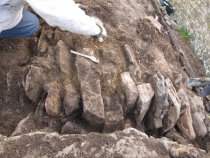
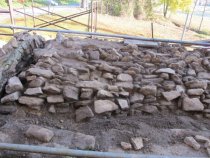
![#9, photo 9886: re-aligned extrados [outer] stones on vault](https://s3.amazonaws.com/pastperfectonline/images/museum_296/006/thumbs/100201010-9.jpg)
Metadata
Collection |
Keim |
Title |
Root cellar restoration and Exhibit Shelter |
Archive Number |
KPH5 |
Description |
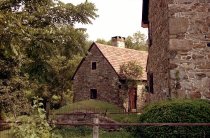
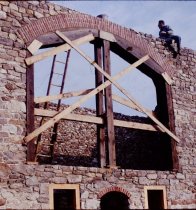
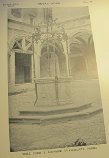
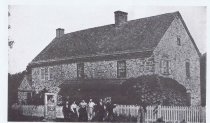
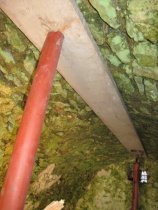
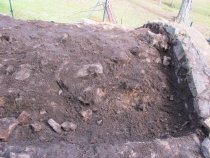
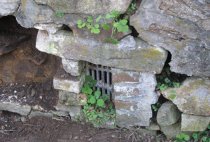
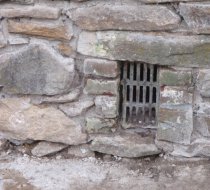
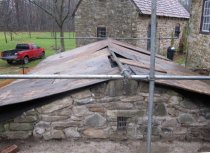
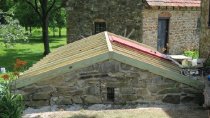
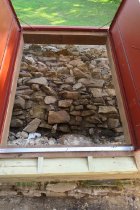
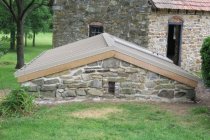
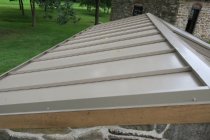
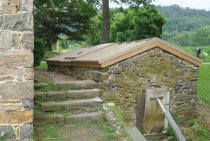
Image #1 is from Frame # 12 of 16 (2-17) from 35mm color negatives, all various views of the buildings on the Jacob Keim Farmstead. This view of Keim house ("quoin" corner detail, right in photo), sod-covered vaulted "root cellar", center-foreground, and gabled ancillary building, which included a wood turner's shop in the 18th century. Image #4, photo KH4, 10/26/10, is a c. 1897 perspective view from the northwest of a small stone gabled structure set on the rectangular abutment walls of the surviving root cellar. The author of the essay cited in that record considered the structure to be a bake house. Image #2 is a c. 1960 photo of the restoration of a large-span brick arch above the doorway to the threshing floor of a barn on Covered Bridge Rd. in Oley Township, PA. This rarely seen traditional detail provides a clear depiction of the technique employed in constructing a structural arch in the ages-old technique under which the masonry "units" [brick or stone "voussoirs"] are laid on the centering frame at radial angles to the arch's geometric center. The balance of the arch or vault's masonry mass is laid up in a conventional "random rubble" (the Keim Method) or in a curvilinear coursed pattern (Oley barn brick arch, Image #2). The arch-form vault, supporting the masonry work-in-progress on a "centering" frame or "false-work," is an intuitive shoring and forming method having its origins in the ancient Roman masonry and early medieval joinery traditions, which persevered through the Renaissance and into the modern period. Image #3 shows a Northern Italian centering frame supported on temporary brick piers to facilitate the restoration of an arched opening [left in photo] of a Renaissance arcade. If the voussoirs are correctly canted, aligned and set in stable mortar that allows passage and evaporation of moisture, removal of the centering formwork leaves a structurally durable masonry arch or vault. These long-standing techniques transmitted through generations of experienced masons were adopted for the temporary support of the Keim vaulted cellar. Although an arched vault typically maintains its structural stability for centuries, the Keim food-storage "cellar", exposed to precipitation when the small gabled building was removed after 1897, was compromised by water infiltration through the sod covering for over a century. This periodic saturation, and freeze-thaw cycles in winter, eventually fractured the bed and joint mortar between stone units forming the vault, causing disintegration of mortar bonding the "intrados" [inner] stones in the stable equilibrium of the vault. When the temporary "centering" support was installed [Image #5 , photo 6936, 11/18/11], several stones had dislodged from the intrados and fallen to the floor, further de-stabilizing the structure. The open joints of the "soffit" (ceiling) of the cellar were re-mortared and fallen stones re-set ("mudded-in") to the voids. The next phase of the restoration of the cellar required the prevention of further infiltration of moisture to interrupt the progress of the deterioration of the sheltering vault. Initially a plywood roof was installed and tarped over as temporary protection and winterization [see Image #12]. The permanent solution to the saturation damage was the installation of a low-profile roof, with exhibition doors to allow viewing of the rarely seen exterior stonework forming the "extrados" [exterior radial wall] of the vault. The following sequence was followed in sheltering the barrel-vaulted root ["cave," "ground"] cellar, restoring the end-wall and grilled vent, and installing the low-profile "roof": 1.Removal of the sod and porous fill-soil between extrados stones: Image #6, photo 6683, 10/28/11, after sod removed; and Image #7, photo 6688, 10/28/11: removing loose/un-compacted soil from exterior stonework voids; 2.Removing excess stones laid in as bedding for sod: Image #8, photo 6739, 11/21/11; 3.Exterior stonework roughly re-aligned in "rubble" arch-form: Image #9, photo 9886, 8/27/12; 4.Re-setting the stone arched northern end wall and re-framing the iron vent-grille with the original bricks: Image #10, photo 6744, 11/2/11: pre-restoration, and Image #11, photo 6916, 11/17/11, post-restoration; 5.Rubber roofing-material and a plywood temporary roof were placed over the arched cellar-vault to prevent further de-stabilizing saturation of the vault masonry, Image #12, photo 6944, 11/22/11; 6.When funding became available in 2017, framing and rafters were constructed to support a metal exhibit-shelter; the steel viewing doors were temporarily set in to size and fit the framed door opening: Image #13, photo 7, 6/29/17; 7.The exhibit doors, water-tight when closed, can be opened for viewing the exterior stones of the vault, which is usually concealed by ground-cover and vegetation, a building such as the small gabled structure which rested on the perimeter walls surrounding the Keim cellar vault [Image #12], or the wooden flooring of dwellings and ancillary structures such as the Johan DeTurck "Grossmutter's" house and multi-purpose structure, or the masonry floor of the smoke-chamber attached to the George Douglass House: Image #14, photo 15, 6/29/17; 8.The metal roof completed the exhibit shelter covering the vaulted cellar: Image #15, photo 16, 7/12/17 (slightly elevated perspective view from the north, showing the minimal projection of the shelter structure into the sight-horizon of the ancillary building); Image #16, photo 19, 7/12/17 (detail view of eastern plane of exhibit shelter); and Image #17, photo 23, 7/12/17 (detail view of western plane of shelter with exhibit doors). Laurence Ward, January, 2021 |
Search Terms |
Keim Photo KPH K Voussoir KHPH Barrel vault KCPH Sod cover Keim Cabin Photo Rubble stonework Keim House Photo Exhibit shelter Brick Relieving Arch Intrados Casement Window Random-rubble Masonry Central Chimney Clay Tile Roof Cave Cellar Perspective Photo Ancillary Building Plate Tie Root Cellar Ground Cellar Bakehouse Ancillary Building Centering Extrados False-work Centering frame Keim ancillary building Exhibit doors |
People |
Keim, Jacob |
Object Name |
Negative, Film |
Accession number |
1002.01 |
Date |
c.1990 |
Photographer |
Ward, Laurence |
Catalog Number |
1002.01.010 |