

Archive Record
Images
![Image #3, 4905: Cantilevered balcony supports ["outlookers"]](https://s3.amazonaws.com/pastperfectonline/images/museum_296/005/thumbs/10080147-3.jpg)
Additional Images [19]
![Image #7, 5042: 3 new stone steps; old concrete steps above [removed]](https://s3.amazonaws.com/pastperfectonline/images/museum_296/005/thumbs/10080147-8.jpg)
Metadata
Collection |
Sites & Structures Reports |
Archive Number |
HPTSSR3 |
Title |
Sites and Structures Report, August 2011 |
Description |
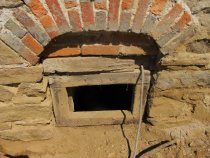
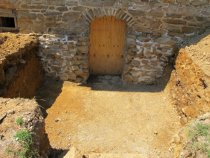
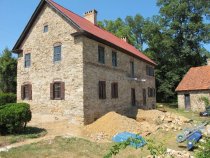
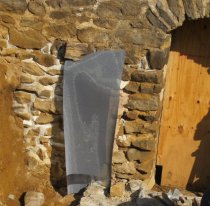
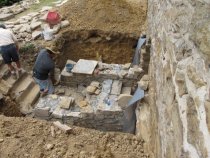
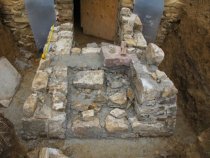
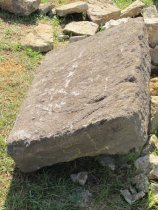
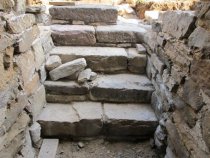
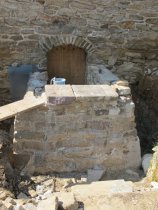
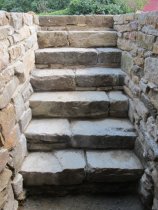
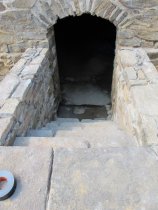
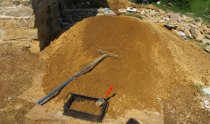
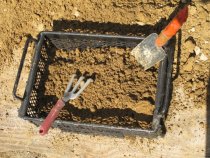
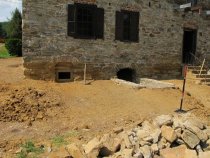
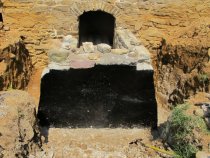
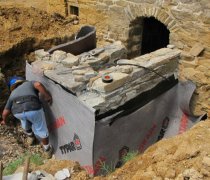
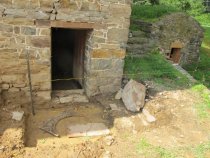
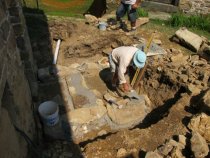
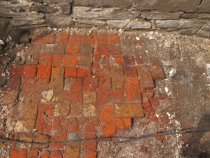
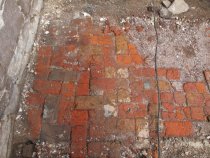
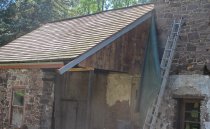
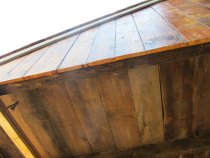
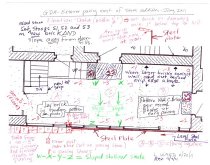
Sites & Structures Report for the August 2011 Board meeting of the Historic Preservation Trust of Berks County: Keim House: A. Removal of the porch and concrete cellar steps, retaining walls, and bulkhead side-walls ["cheeks"] revealed numerous original architectural details concealed by these massive 20th century accretions, including the flattened ["suppressed"] brick-arched cellar window [Image #1, photo #4855], and the arched cellar "doorway" [or "open-way" or "cellar-way" if originally no door was installed; Image #2, #4884 shows clay tamped to provide bearing layer for stone footings of the cellar staircase]; foundation-plinth joints have been re-mortared; bond-stones "toothed" from abutments will be joined to retaining walls. B. Long, [temporarily metal-capped] outlookers [Image #3, #4905], supported the original second story balcony, which will be re-constructed after thorough research and documentation on appropriate form, materials, and railing and baluster details. C. Image #4, #4914: Photo of west gable wall and south eaves wall after 20th century porch-rafter pockets have been filled in with stones found on the site and woven into the "random rubble" walling pattern; mortar joints recessed ["set back"] for future pointing. D. Most of the Trust's restoration work in August has consisted of construction of retaining walls and steps to the cellar under the western portion of the 1753 house. A woven, relatively non geo-degradable polymer "mesh" was inserted between the foundation plinth and the reconstructed walls as a clear demarcation between the new stonework and the original masonry [Image #5, photo #4952]: Image #6, #4990: cellarway retaining walls under construction [20th century concrete steps to left]; stones came from porch piers and back-walls of concrete walls at cellar-way, and had probably been previously used in the retaining walls flanking the early cellar entry. Stones are laid out in yard to facilitate selection and masoning for position in walls to optimize the long-term integrity of the re-constructed wall. Tread, riser, and "run" dimensions and proportions were calculated and installed as shown in the accompanying photos. Image # 7, #5042: tread-stones, with staggered vertical joints, are anchored by being "pocketed" a few inches into adjacent retaining walls. The 20th century concrete steps had projected six feet farther south (toward the barn) than the stone stairway constructed in the traditional manner, structure, and proportions. Image # 8, #5043: building up core with mortared "rubble" [smaller stones of irregular sizes and shapes] to support treads. Images # 9, #5074: Tread-stone marked ["T5A"] for intended location at 5th tread level. Image # 10, #5085, 8/5/11: integrated steps and side-walls half-way to upper landing elevation; shims set level for each riser and tread; Image # 11, #5253: upper landing stones set at same elevation as retaining walls to provide level platform for future wooden "cellar-cap" [two angled "bulkhead"{a} doors and triangular board "cheeks"]. {a} a 19th century term for "cellar doors" [Carpenters Company Rules, or "cellar cap" [see Lounsbury, Glossary…, p. 53]. Images # 12 & 13, #5339 & #5334, 8/17/11: Retaining walls and upper landing leveled to receive doors, support-frame, and cheeks. Images # 14 & #15, #5246 & #5256, 8/11/11: clay excavated from the site was manually raked and sifted; the few artifacts found were bagged and labeled. Image # 16, #5397 shows rough grading along west gable wall and restored cellar entry area [right edge of photo]. The outer perimeter of the three-segment cellar-entry wall was waterproofed with mortar pargeting to establish a roughly single-plane vertical contour, coated with a liquid-application rubberized product, (Eco-Flex) [Image #17, #5290], and lined with Delta-Drain moisture-barrier/water-conducting membrane [Image # 18, #5295]. E. Cellar walls & steps at c. 1800-1820 addition: Image # 19, #5319: excavation at cellar entry to c. 1800 addition; to the right is doorway to ground [also "root", "arch", or "cave"] cellar, with wooden "centering"{b} frame supporting the load above the entry opening during repair of failed brick arch. {b}: "Centering" consists of timber form-work creating a braced [in this case by plywood "tympanum"] upon which the stone arch-ring voussoirs [slightly wedge-shaped stones often with a keystone at the arch-crest or "crown"] are set and "mudded-in" with mortar until the joint mortar cures, followed by the laying up of the wall superstructure borne by the arch spanning an opening. Image #20, #5400: laying out footings and base-stones for steps/treads and rubble core. A construction-detail drawing and several photos of the as-built staircase into the addition appear in archive record KR11FN2. George Douglass House and additions: The brick re-paving of the Douglass-Leaf store-yard will be completed in August or September using the 19th-century paving bricks found in Morlatton Village. [Note: several areas of original stable brick paving were left undisturbed, and replacement brickwork was woven into the old pattern]". The varying brickwork patterns found under the concrete slab [Images #21 & 22, photos #4010 & 4011] provided guidance and a template fragment in the re-paving process. The roof-extension hood over the three doorways in the SW corner of the yard is progressing: treated vertical board sheathing has been installed on the half-gable [Image # 23, #5540]; floor boards have been laid in the loft over the hooded area [Image #24, #5549]. Image #25, 7/1/11 construction-detail drawing of brick store-yard re-paving [GDH store yard paving]. The stone paving under the roof drip-edge has been set on grades modified to shed water away from the buildings and store-yard. Requested Board action: 1. Approval of continuation of masonry stabilization and restoration of GDH buildings, including the unstable gable wall of the late one story "slaughter house", and walling-up of two non-period windows in the south gable wall of the Douglass federal-period store addition. 2. Transfer of the George and Janice Wolfe fund to the Shelley account in recognition of double-matching Shelley grants toward restoration of the Douglass complex. 3. Initiating a funding campaign for the restoration and preservation of the Keim house and ancillary building, with double-matching support from the Shelley Pennsylvania German Heritage Fund. Approval of the funding flyer for editing and layout. Submitted by the Sites & Structures Committee, Laurence Ward, Chair; Updated November, 2016 |
Date |
August 2011 |
Object Name |
REPORT |
Catalog Number |
1008.01.048 |
Search Terms |
Porch removal bulkhead Cellar cap cellar staircase Cellar steps Cellar-way open-way outlookers random rubble mesh membrane Delta-Drain Eco-flex cheek walls plinth store yard random rubble toothed stonework tread stone root cellar centering brick paving HPTSSR Sites & Structures outlooker elieving arch cantilever cellar steps doorway arch store-yard open-way cellar-way cellar entry cellar cap Delta Drain centering rafter pockets |