

Archive Record
Images
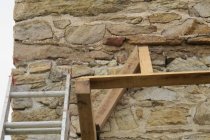
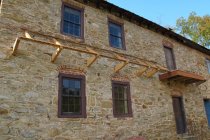
![#4, 4621: Cantilevered joist-extension supports ["outlookers"]](https://s3.amazonaws.com/pastperfectonline/images/museum_296/005/thumbs/10080157-3.jpg)
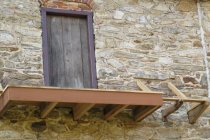
![#6, 4140: radial-sawn ["coved"] attic floor-joist ends](https://s3.amazonaws.com/pastperfectonline/images/museum_296/005/thumbs/10080157-2.jpg)
Additional Images [5]
Metadata
Collection |
Sites and Structures Reports |
Archive Number |
HPTSSR17 |
Title |
Sites and Structures Report, October 2013 |
Description |
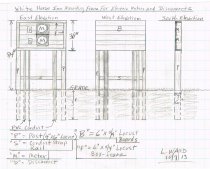
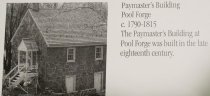
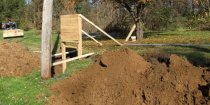
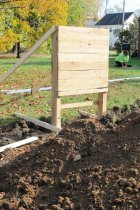
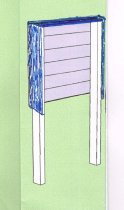
Sites & Structures Report for October 9, 2013 meeting of the Board of the Directors of the Historic Preservation Trust of Berks County. The following is a summary of stabilization, preservation, restoration, and related work planned, completed, and in-progress, including requested Board approval or other action on pending work and projects under consideration: I. White Horse Winterization: A. Attic Insulation in progress [original 1765 Tavern only]; B. Interior [façade and gable-ends] and/or exterior storm door & windows; C. Heating oil bids status? II. Electric service project , to move Tavern & Douglass electric cables underground: A. Township permits pending; B. Locust posts and mounting frame for meters and disconnect panel [Image #1, Elevation sketches attached]; See as-built photos and perspective drawing, Images ##8, 9, & 10. III. Paint project for WH entry steps and porches: Frank is ready for color selection. IV. Keim House: Pent roof, balcony, kitchen entry structure, and cove cornice: A. Repair, consolidation, and extension of balcony and pent roof outlookers substantially completed [Image #5, Photo 4626]. B. Proposal: (1) Pent roof covering material: Option #1: "hipped" pent roof covering is conventional sawn western red cedar shingles, 32" lengths, 10" exposures, 5/8" butts, 4"-8" widths, no interlayment, mitered at return joints. The hip pitch and rafter alignment, closely symmetrical at both ends of the pent except for a few inch differential in flashing over-hang, are indicated in attached Image #2, photo #4697. Option #2 selected: after further research, and consideration of the photographic evidence of clay tile covering on the early-period roof [Image #11], the decision was made to install tiles on lath to cover the pent roof, with round-form cap tiles on the hipped-return joints. (2) Since there is no current evidence of stone piers or footings [after archaeological excavation], the current plan is to support the entry stair [open-riser "step ladder" type] and stoop/landing on wooden posts, somewhat like the Pool Forge entry in Image #3, photo #4659 attached, but without hood-support posts or benches. (3) The balcony surround will also include simple, possibly beaded, board rails with corner posts. The outlookers, fascia, and temporary flooring are shown in Images #4 & 5, photos #4621 and 4626. (4) All of the new woodwork on both levels will be painted with the "Spanish Brown" color determined by Matt Mosca to have been the earliest finish on window frames on the 1753 house. (5) The coved plaster cornice [1753 house only] to be restored on old re-claimed lath nailed to the original coved joist ends [Image #6, photo #4140]. The cornice on the addition was obviously not contemporary with the house and will be stabilized in its current 19th century "box" form and considered for future restoration. Image #7, photo #4618, shows the restored outlookers, rafters, rafter plate, and original flashing course for the re-fabricated pent roof on the 1753 Keim house. (6) The 2013-14 and future projects funded by the Shelley account will be limited to the original1753 house, except for structural stabilization and weatherization, which will be eligible for matching grants.. V. Mouns Jones Site Archaeology: A. Propose winter-time interior excavations and examination under wall plaster to locate stone joists/piers & other structural features, possible artifacts, and seek evidence of central doorway location and masonry alterations. B. Possible cellar wall [earlier log house?] exposed by Chapter 21 archaeologists in Unit 13, about 5-6 feet from MJH doorway. VI. Morlatton Village site work: Hazardous trees behind MFH have been cut down and partially cut to length for firewood. ACTION REQUESTED ON: I-B & C; III; IV-B; and V-A. Submitted, Sites & Structures Committee, Laurence Ward, Chair; Updated November, 2016 and November, 2020. This panel will distribute and meter electricity to the Tavern underground, removing the modern intrusive wiring and appurtenances from the walls of the building. The board-face of the mount structure will be screened from the road by appropriate plantings, except when used for event and activity posters as convenient. Laurence Ward, Nov. 2013 and November, 2020. |
Date |
October 2013 |
Object Name |
REPORT |
Catalog Number |
1008.01.062 |
Search Terms |
HPTSSR Sites and Structures Committee Report outlooker tile roof open riser balcony railing coved cornice Spanish Brown box cornice hipped roof Hip rafter Fascia board Underground electric flashing Electric panel mount-frame Flashing course Pent framing |